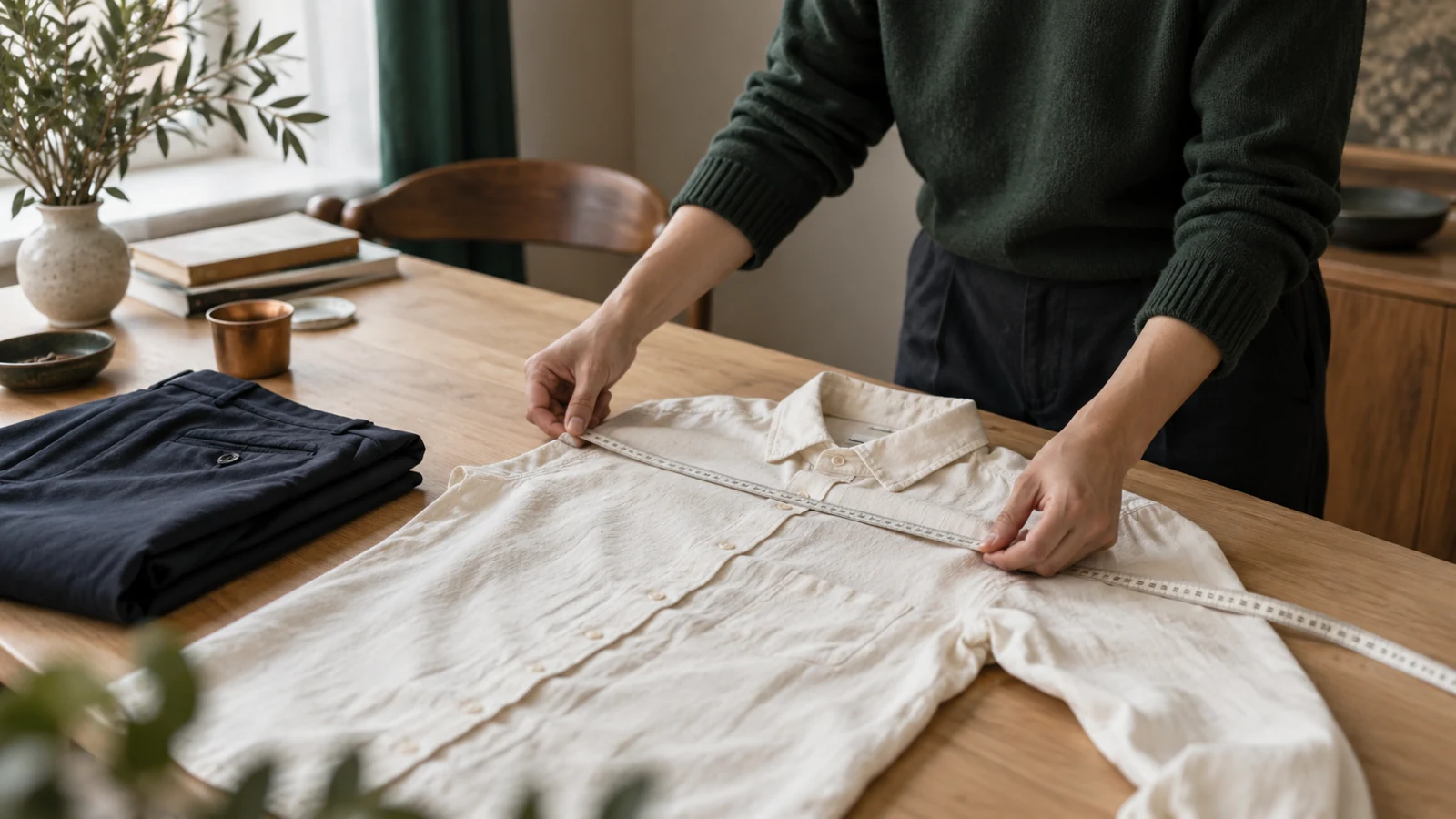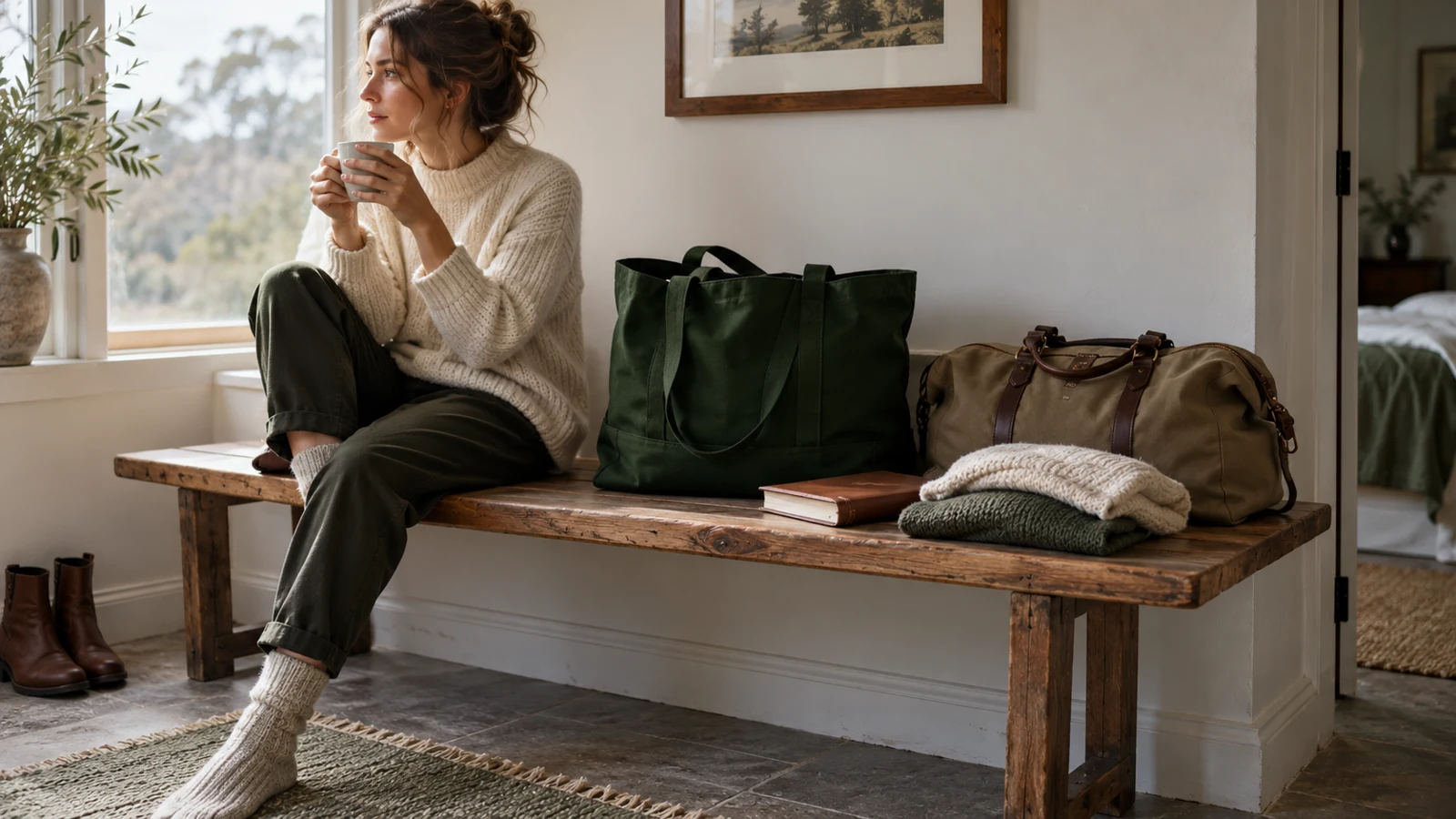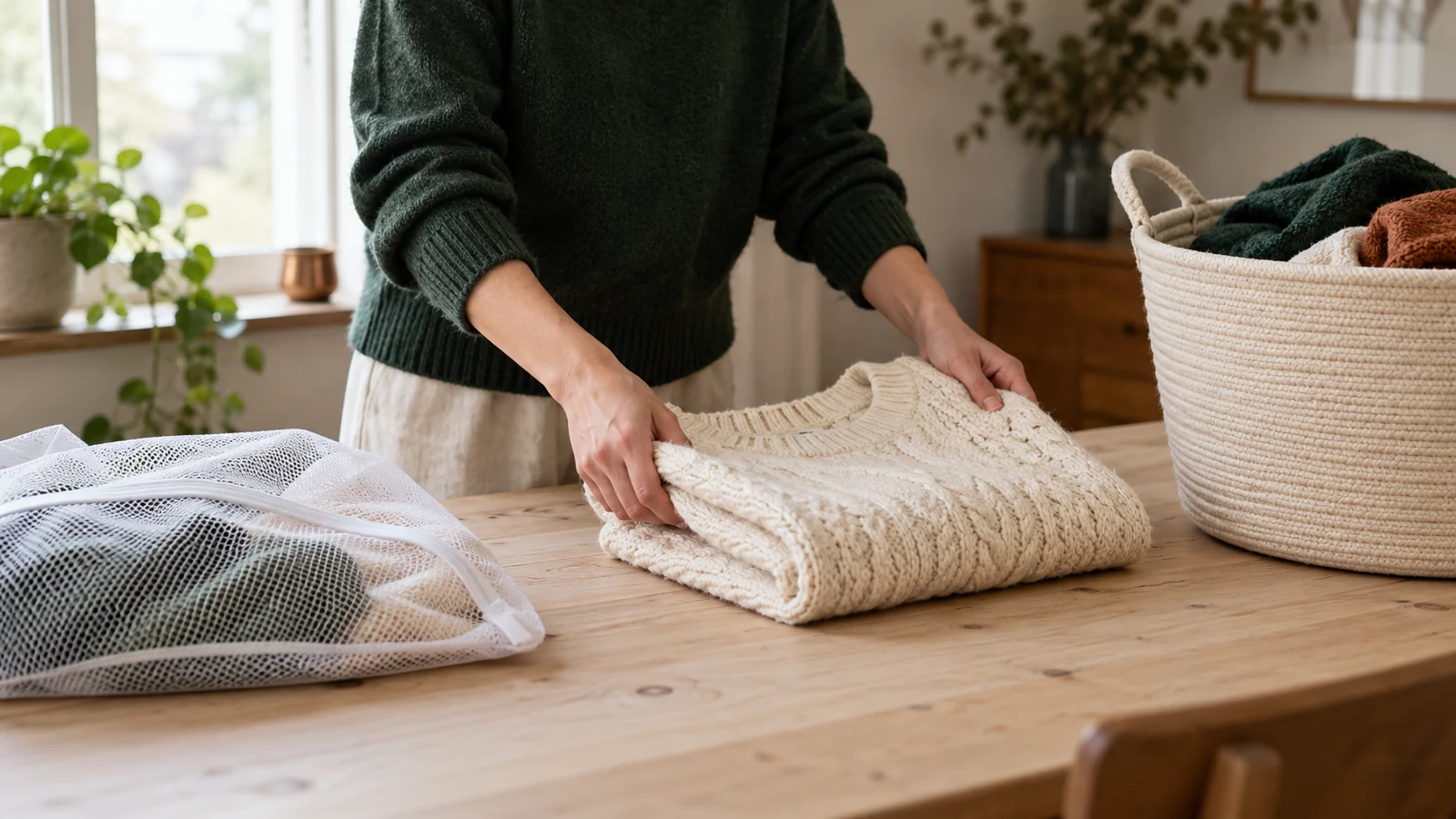
Clothing care begins before the first wash. It starts with understanding what you have bought, how its different materials are constructed and which instructions apply to that particular item. A familiar colour or a soft texture does not mean two garments can share the same treatment. Taking a little time to read the label can prevent a routine task from becoming an avoidable disappointment.
This guide focuses on organising garment care at home. It does not prescribe one temperature, detergent or drying method for the entire Koventi clothing collection. The actual manufacturer's instructions should lead the decision. Where a listing lacks important material or care details, ask Koventi using the product serial before ordering or attempting a treatment. A useful care routine should fit both the garment and your household.
Read the complete label rather than one symbol
Look at the whole set of care instructions, including any written warnings, material details and information about separate components. A washing instruction does not automatically permit tumble drying or ironing. A trim, lining or fastening may require a more cautious method than the main fabric suggests. Treat the label as a set of connected instructions rather than selecting the one symbol that matches your preferred routine.
If you are uncertain about a symbol, check a reliable care reference or ask the retailer for clarification. Do not guess that a low temperature makes every other treatment safe. Keep a photograph of the label with your product information, particularly when several similar garments have different instructions. This is also useful if the label later becomes difficult to read. Retain the actual label and any supplied instructions rather than relying solely on a saved photograph.
Connect fibre information with the actual garment
The composition label identifies fibres, but fabric construction, dyes, finishes and combined materials can also influence care. A fine knit and a robust woven piece may need different handling even if both contain the same fibre. A garment with contrasting panels may introduce additional considerations. Avoid turning a material name into a universal cleaning rule.
The government's textile labelling guidance explains the role of fibre content information. For your daily routine, pair that information with the care instructions attached to the finished product. If the composition is important because of a personal preference, confirm it before buying. The care guidance here does not establish that any particular Koventi garment contains a specific fibre, has been tested for a treatment or is suitable for a particular skin sensitivity.
Sort by instructions and colour compatibility
Build wash groups around what the labels permit. Consider colours, fabric weight, loose trims and the likelihood of friction between items. A heavy piece with exposed fastenings may not belong with a delicate knit simply because both are dark. Check pockets and remove objects that could damage the garment or machine. Follow any instructions about closing fastenings or turning items inside out.
Keep the process manageable by separating uncertain items instead of making a quick assumption. If one garment requires a different method, plan a suitable time for it. A small basket or a written note can prevent it from being added to a routine load accidentally. When washing a new item, pay particular attention to any colour-related warnings. Do not assume that matching shades on a screen guarantee that fabrics can be washed together without affecting one another.
Prepare a sensible space for washing
Read the appliance instructions as well as the garment label. A permitted wash method still needs an appropriate machine programme and load arrangement. Avoid crowding the drum simply to finish more items at once. Follow the detergent manufacturer's directions and relevant safety advice rather than estimating a larger dose will produce a better result. Keep cleaning products stored and used according to their labels.
Remove accessories or detachable parts only where the garment instructions allow it. Check whether a belt, hood or insert has its own care information. Place anything temporarily removed somewhere safe and labelled so it returns to the correct item. Do not treat a garment bag or a delicate programme as permission to machine-wash an item whose label prohibits it. Protective accessories can support an allowed method; they do not override the manufacturer's instructions.
Treat stains cautiously and promptly
When a mark appears, identify the material and the permitted treatment before applying a product. Avoid aggressive rubbing or combining cleaning chemicals. An unsuitable treatment can spread a stain, affect a finish or damage a trim. Follow the garment label and the cleaning product's directions, and seek professional advice where the item requires specialist care or the cause is uncertain.
If a test on an inconspicuous area is recommended by the product instructions, follow that recommendation carefully. A successful small test is not a guarantee for every part of a garment, especially where colours or materials differ. If you believe an item arrived marked or faulty, document the condition and contact the retailer before attempting a repair or treatment. Keep that concern separate from ordinary maintenance so the facts about the delivered condition remain clear.
Give drying the same attention as washing
The end of a wash is not the end of the care process. Check whether the label permits tumble drying, flat drying, line drying or another method. Think about the garment's weight when wet and how it is supported. Pulling, twisting or hanging an unsuitable piece can change its shape. Follow the instructions rather than assuming the fastest available method is harmless.
Plan enough space for items to dry in a suitable environment. Avoid storing garments while damp or placing them against an unsuitable heat source. Where reshaping is advised, handle the item gently in the manner specified. Do not promise yourself that an item will dry by a deadline without considering its material, thickness and the available conditions. A realistic laundry schedule can be part of deciding whether a garment fits your life before you purchase it.
Store clothing according to its shape and use
Review how each item is supported in the wardrobe. Some pieces may benefit from folding, while others can be hung appropriately. The care instructions and construction should guide the choice. Avoid forcing several garments into a tight space where fastenings snag neighbouring items. Make sure clean clothing is suitably dry before it is stored, and keep the storage area in a condition appropriate for textiles.
Organise pieces so you can see and use what you own. Rotating between familiar garments can help you notice a loose button, an open seam or a worn area before an outing. This is an observation habit, not a guarantee that damage can always be prevented. If a repair is needed, consider whether the material and construction are suitable for the proposed work. A qualified repair service may be a better route for an unfamiliar or valuable item.
Check clothing intended for children with extra care
Children's clothing needs attention to its intended age, instructions, fastenings and condition. Do not treat an oversized garment as automatically suitable simply because it offers room to grow. Check for damage or loose components and follow relevant warnings. If an item raises a safety concern, stop using it while you seek appropriate advice rather than attempting an improvised solution.
GOV.UK's consumer product safety guidance is an independent place to start when considering product information and warnings. The Koventi kids clothing category contains individual listings whose details must be checked separately. An editorial mention does not certify a product, establish age suitability or replace manufacturer instructions. Ask for missing information before buying where the intended use depends on it.
Separate a care mistake from a product concern
If something changes unexpectedly, record what you observed and which process was used. Keep the label, order reference and any relevant photographs. A factual account helps distinguish an accidental treatment from a concern about the supplied item. Avoid assuming either explanation without checking. Contact the retailer with a clear description and do not continue treatments that could make the assessment harder.
Read the Koventi returns information and Terms & Conditions for the process relevant to an order. General consumer protections are separate from a discretionary return preference and are not removed by this guide. The government's returns and refunds guidance provides further context. The outcome of a particular concern depends on its circumstances; no article can decide it from a short description alone.
Build a care routine you can maintain
Create a small record for garments needing special attention. Include the product serial, label photograph, permitted washing and drying methods, and any specific instructions supplied with the item. Group your routine around those requirements rather than trying to remember everything. Before a busy week, identify which pieces are ready and which need time for an allowed cleaning process.
When shopping, use the same practical thinking. A garment that looks useful but needs care you cannot reasonably provide may not be the best choice for you. Compare the current collection, consult our fit guide and choose pieces that suit both your clothing needs and your care routine. There is no single treatment for every wardrobe. Consistent attention to the actual label is the most useful starting point.
Official guidance & further reading
These links provide independent context. Rules and services can change; check the source for the current position relevant to your circumstances.
textile labelling guidance↗GOV.UK's consumer product safety guidance↗returns and refunds guidance↗Prepared by Koventi Editorial. General shopping and planning information, not individual legal, customs or professional advice. No government or carrier endorsement is implied. Product-specific claims must be checked against the actual listing and written confirmation.
A question about a particular product?
Include its Koventi serial number so the team can review the right item.
Contact Koventi