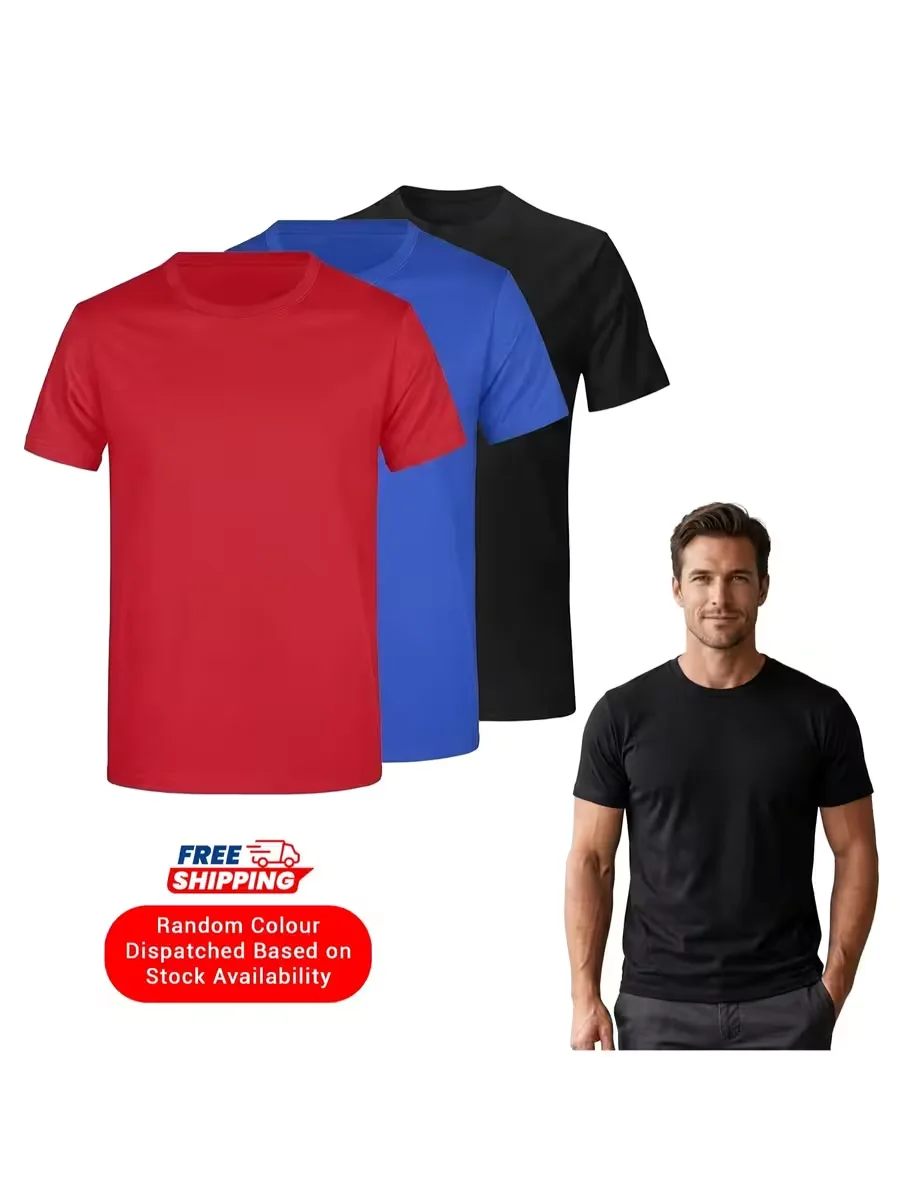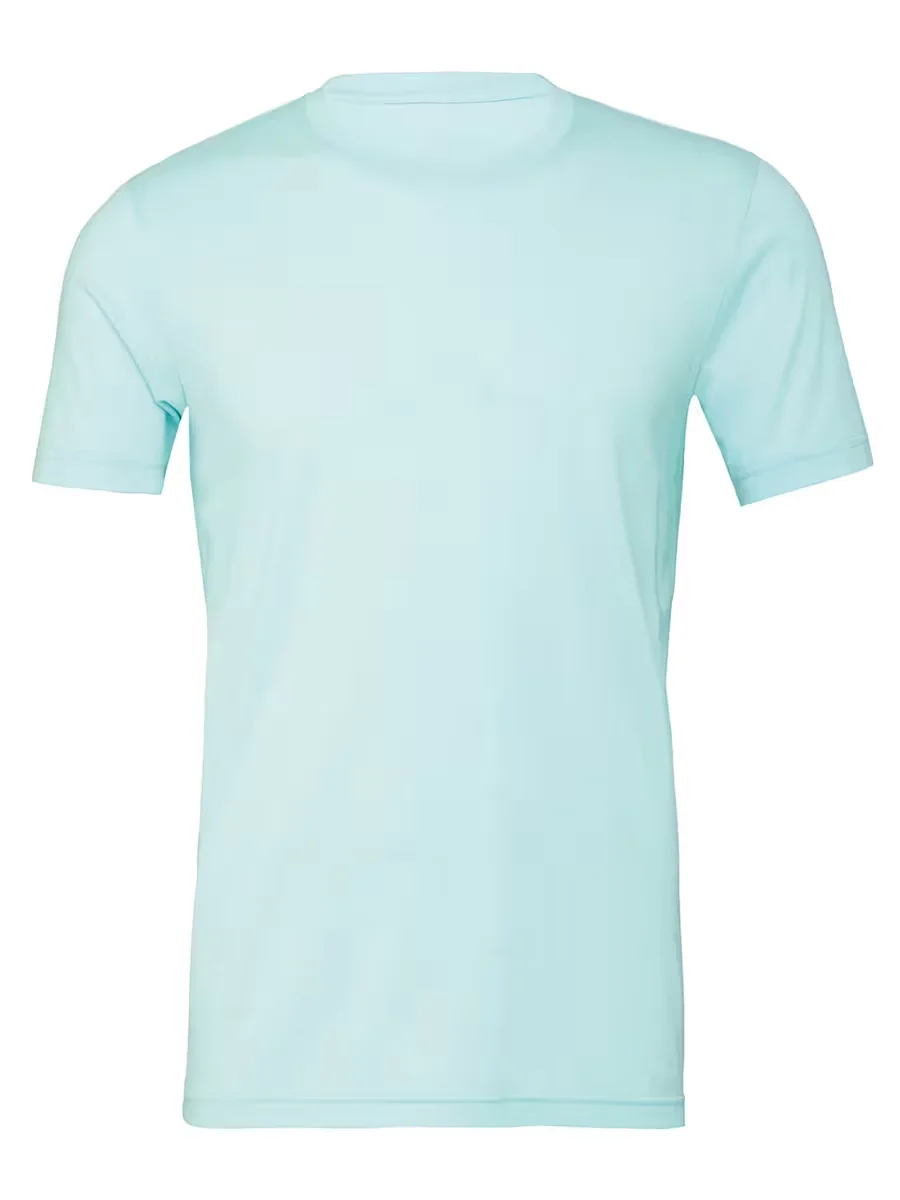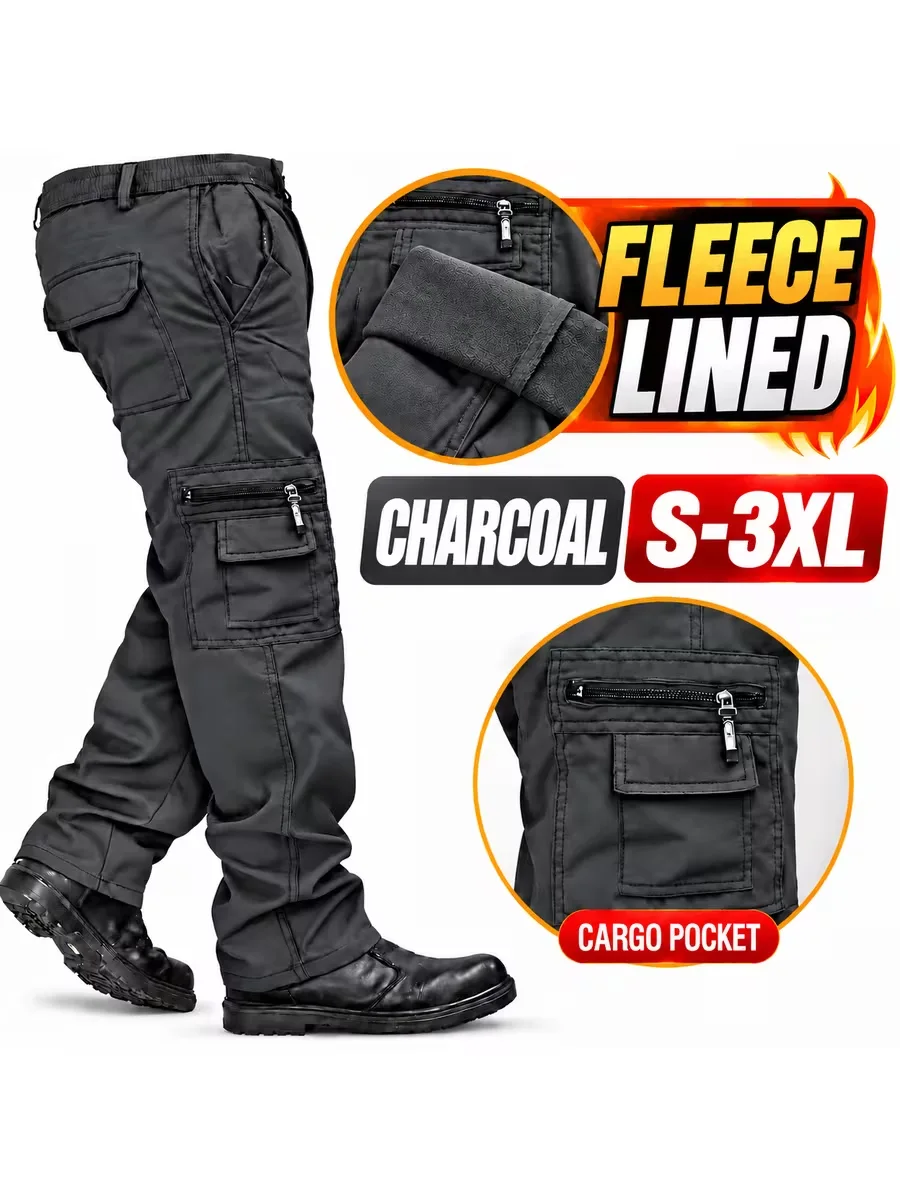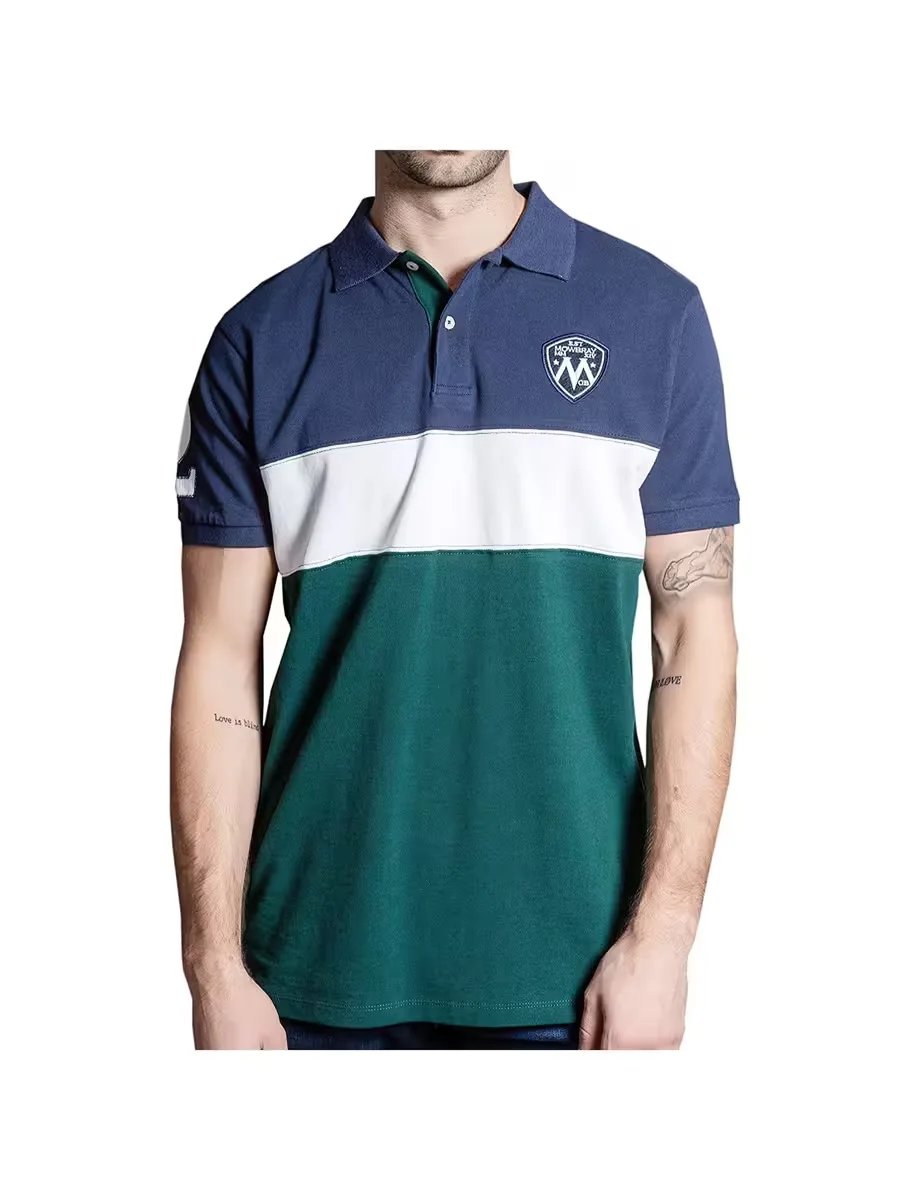
A useful wardrobe is built around the days you actually have: a cool journey to work, a warm indoor meeting, a quick school run or a weekend that changes with the weather. Layering helps you adjust without carrying a different outfit for every possibility. It also makes individual pieces work harder. A plain T-shirt can sit beneath an overshirt, a light knit or a jacket, provided the proportions and fabric weights work together.
This guide takes a practical approach to choosing everyday clothing online. It is about planning combinations, asking better product questions and avoiding purchases that do not fit your routine. It does not assume that a photograph proves a garment is waterproof, breathable or made from a particular fibre. Explore the Koventi clothing collection, then use the individual product serial when you need an exact answer.
Start with your weekly routine
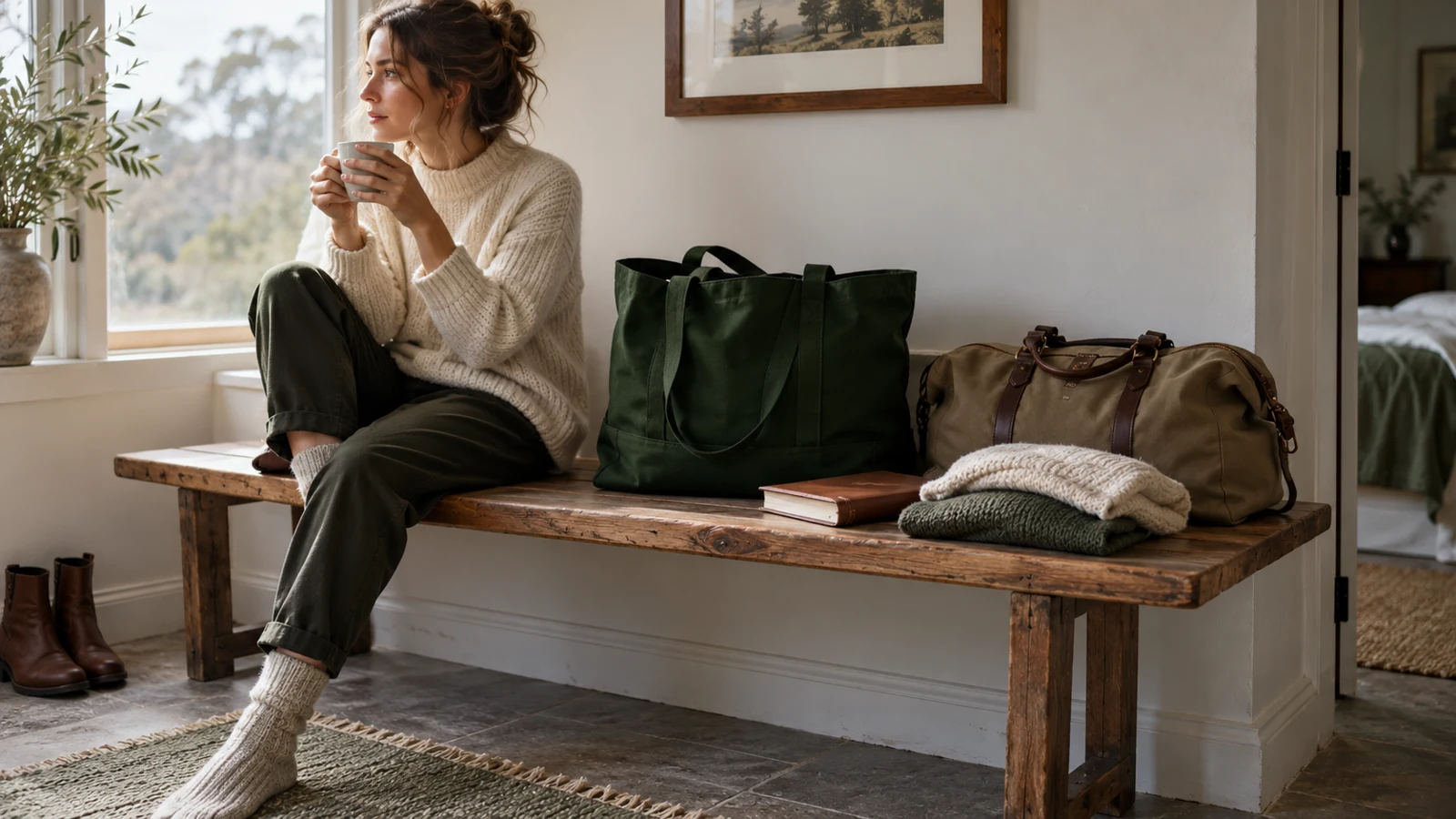
Write down the situations you dress for most often. Separate time spent outdoors from time spent in heated buildings, and consider whether you walk, drive or use public transport. Someone walking between stations needs different flexibility from someone moving directly between a car and an office. Think about bags, uniform requirements and how much space you have for a spare layer.
Choose two or three repeatable outfit formulas rather than a long list of isolated items. One might be a base top, a relaxed overshirt and trousers. Another could be a light knit over a simple shirt. Give each formula a purpose. If every combination serves the same occasion, adding another similar garment may create less choice than you expect. A small wardrobe can still offer variety when the pieces have distinct roles.
Give each layer a clear job
A base layer sits closest to the body and should feel comfortable through the activities you plan. A middle layer adds warmth or changes the appearance of the outfit. An outer layer gives the final shape and may provide weather protection where that performance is explicitly specified. These roles are useful shopping questions rather than rigid fashion rules.
Avoid stacking several bulky pieces simply because each looks good alone. The combined outfit can become tight across the upper arms or uncomfortable at the collar. Check whether a sweatshirt is intended to fit beneath a jacket, whether the shirt hem sits where you want it and whether a bag strap pulls the layers out of place. If you need technical performance, ask for the verified specification. Ordinary casual clothing should not be treated as protective equipment.
Build a colour palette you will repeat
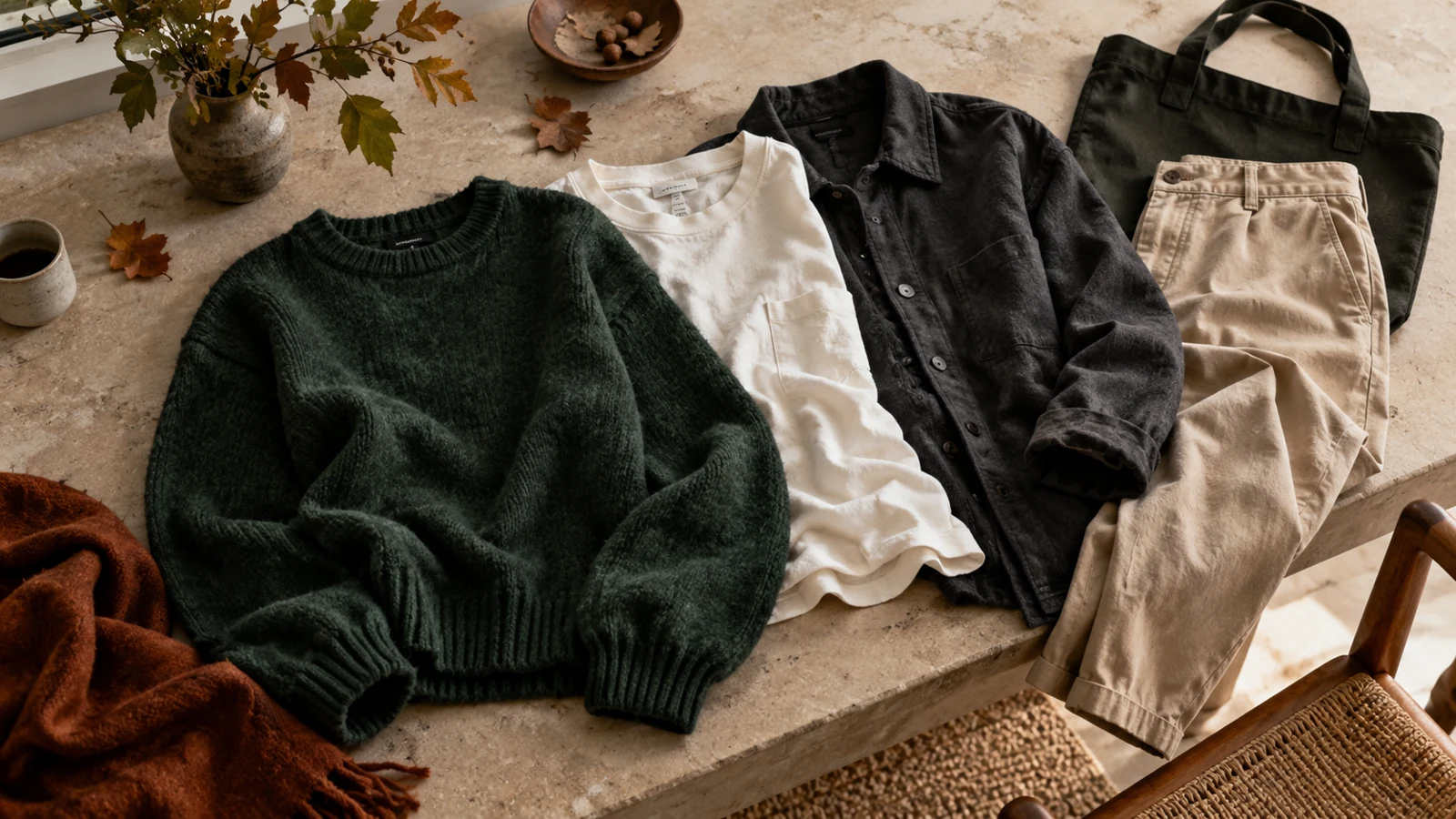
Begin with colours already represented in your favourite clothes. Navy, charcoal, cream, olive and muted brown can be easy starting points, but the best palette is the one you enjoy wearing. Choose a small group of core shades, then add one or two accents. A coherent palette makes it easier to replace a worn item without rebuilding the whole wardrobe.
Look at the balance between light and dark pieces. A pale top under a darker overshirt creates a different impression from several similar dark tones. Photographs are helpful for inspiration, but screen settings and lighting can change how a colour appears. If a precise match matters for an event or a work outfit, ask the retailer to confirm the named colour and available reference photographs. Treat an editorial feature image as a mood, not a promise about a particular SKU.
Check proportions before buying another size
Layering changes how a garment fits, even when your body measurements stay the same. A jacket that fits over a thin T-shirt may feel restricted over a heavy knit. Compare the chest, shoulder and sleeve measurements of a combination you already like. Leave space for movement, while remembering that oversized and regular cuts are designed to sit differently.
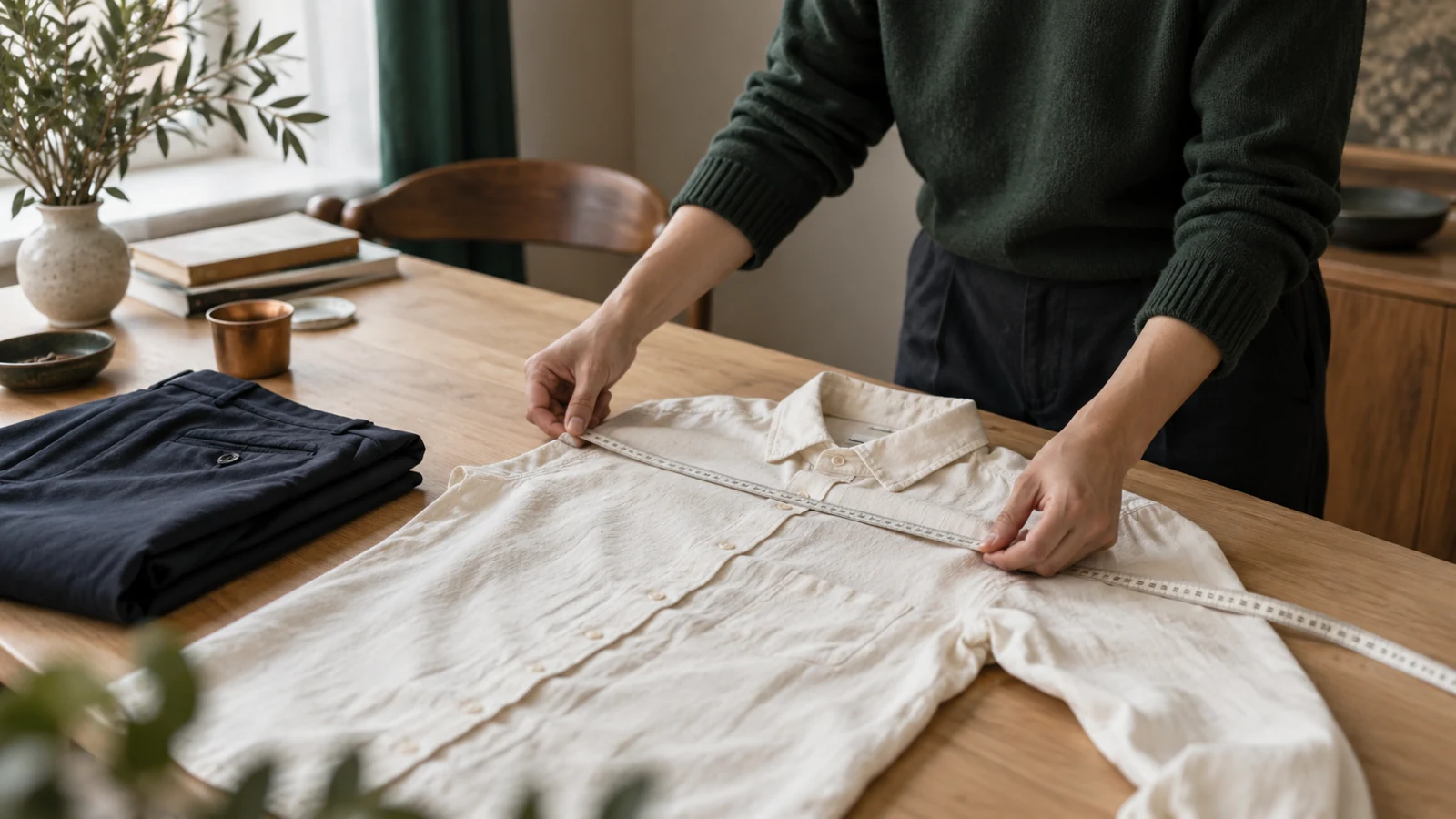
Measure a familiar garment flat and note how the measurements were taken. A flat chest width is not the same number as a body chest circumference. Ask whether the retailer's chart describes the person or the garment, and whether any measurements are approximate. The Koventi fit and sizing guide explains this process in more detail. A consistent measurement method is more useful than assuming every brand uses the same small, medium or large.
Understand materials without guessing from pictures
A soft-looking knit is not automatically wool, and a smooth jacket is not automatically leather. Check the fibre composition, lining and any trim details in the verified product information. Different constructions can change drape, warmth, stretch and care requirements. A blend may be useful for your routine, but a marketing adjective alone is not enough to explain how it will behave.
For regulatory context, GOV.UK textile labelling guidance explains the requirement to identify textile fibre content. Use the actual product label and confirmed listing details when comparing garments. If the online information is incomplete, ask before ordering. There is no benefit in building an outfit around an assumed material and discovering later that the care or texture does not suit you. Keep the answer alongside the relevant product serial.
Choose versatile details, not just a versatile colour
A useful everyday piece has details that support how you move. Think about pockets, fastening type, sleeve cuffs, collar height and whether the garment needs to work while seated. If you carry a phone or keys, check whether pockets are decorative or functional. For an overshirt, consider how it looks both open and fastened rather than relying on one styled photograph.
Try to identify the detail that makes an item different from something you own. It might be a lighter fabric, a more relaxed shape or a colour that links several existing outfits. If you cannot describe the difference, the new piece may duplicate a role already covered. This does not mean every purchase must be purely practical. It means the reason for buying should be clear enough that the garment will leave the wardrobe regularly.
Plan care as part of the purchase
Your laundry routine matters as much as the first outfit. Read the care label before deciding whether a garment suits you. Items requiring a process you rarely use may spend more time waiting to be cleaned than being worn. Consider drying space, storage and how quickly you need clothes ready again. Do not assume every item in a matching colour group can share the same wash.
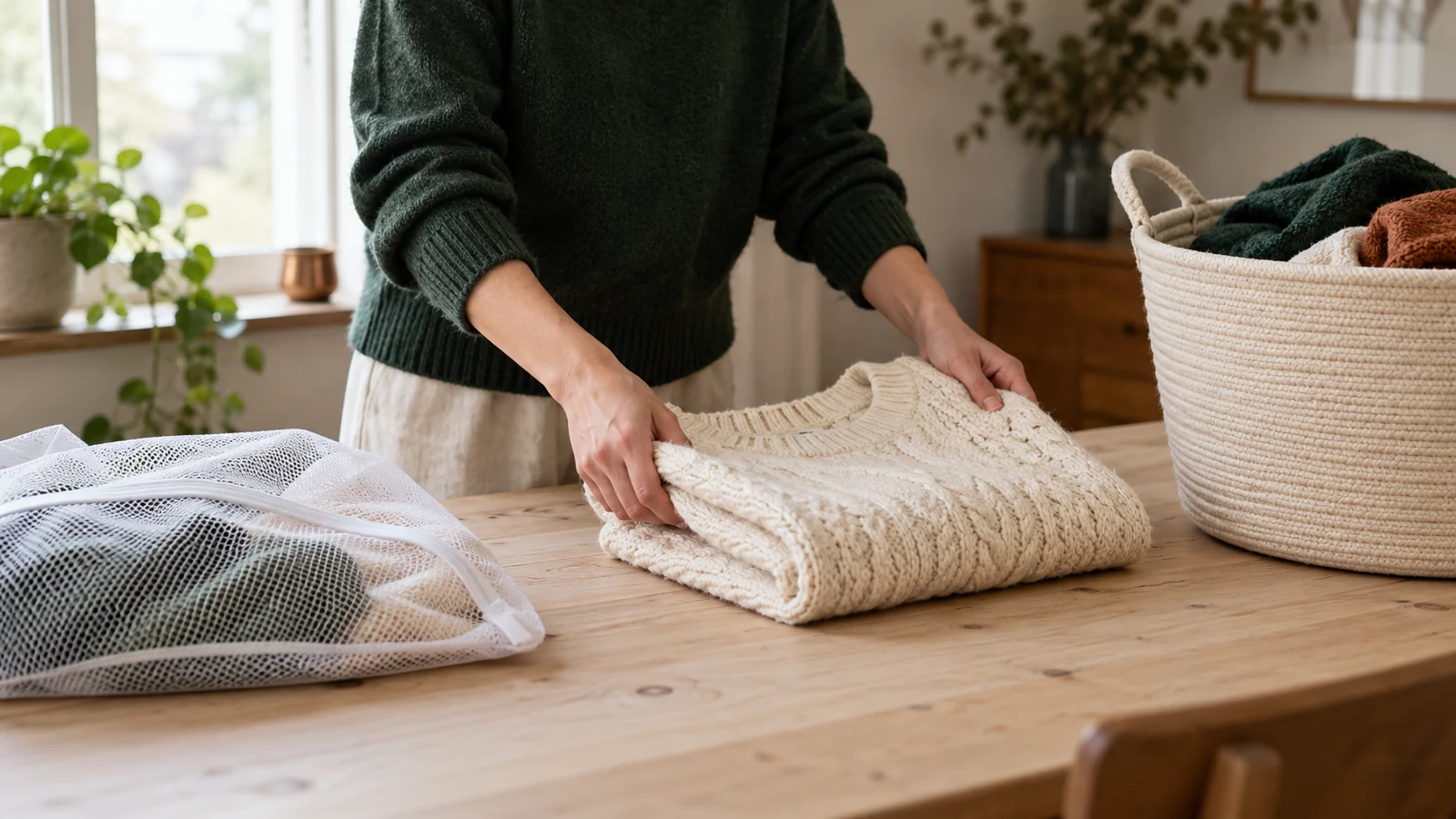
Start with the manufacturer's instructions and choose storage that supports the garment's shape. Some knits are better stored folded, while other pieces may hang more neatly. Check the actual label rather than applying one rule to everything. Our clothing care guide offers a practical way to organise care information. The objective is to make a comfortable routine, not to promise that any garment will last for a fixed number of years.
Create a useful online shortlist
Save the items that fit your planned combinations, then compare them together. For each one, note its product serial, intended role, measurements still needed and any question about material or colour. This turns a browsing session into a decision process. It also makes it easier to contact the retailer once with a clear request rather than several incomplete messages.
Use saved items to keep a shortlist and the shopping bag to review selected quantities. Neither action should be treated as a stock reservation. Check the current Terms & Conditions, delivery information and returns guidance before committing to an order. If your timing is important, confirm availability first. A wardrobe plan should include how and when the pieces arrive, as well as how they look.
A three-outfit exercise before checkout
For each shortlisted garment, imagine three complete outfits using things you already own. Write down the top, bottom, footwear and bag for each combination. If the new garment only works after buying several more items, decide whether that larger purchase is really your intention. This simple exercise can reveal a genuine gap or expose a piece that is attractive but difficult to use.
Then make the exercise physical where possible. Try the existing layers together, sit down, reach forwards and carry your usual bag. Note where the outfit feels bulky or where a different length would help. Use those observations in your product enquiry. Ask for the sleeve or body measurement you actually need rather than a broad question such as whether an item is a good fit. Specific questions produce more useful comparisons.
Your final layering checklist
Before ordering, check the garment's role, confirmed colour, available size, measurement method, fibre information and care instructions. Review the combination as a whole, including movement at the shoulders and the effect of a middle layer. Keep any important written confirmation, especially where a particular fit or material is essential to your choice.
A considered wardrobe is not about having the smallest possible collection or following a fixed aesthetic. It is about choosing pieces that make dressing easier. Start with the current Koventi collection, compare the actual listing details and contact the team with the serial number when something needs clarification. This guide provides general styling information; product-specific descriptions and your agreed order terms remain the details to check before buying.
Official guidance & further reading
These links provide independent context. Rules and services can change; check the source for the current position relevant to your circumstances.
GOV.UK textile labelling guidance↗Prepared by Koventi Editorial. General shopping and planning information, not individual legal, customs or professional advice. No government or carrier endorsement is implied. Product-specific claims must be checked against the actual listing and written confirmation.
A question about a particular product?
Include its Koventi serial number so the team can review the right item.
Contact Koventi